Copyright and courts
The 1.5 billion dollar Anthropic settlement is final, but the per book figure everyone quotes is wrong
The order granting final approval in Bartz v Anthropic is dated 20 July 2026 and Reuters reported it on 21 July. The often repeated maths of 3,109 dollars across 482,460 works does not match the settlement's own final count of 440,490 eligible works, and the fee award is about 101.5 million dollars, not 122 million.
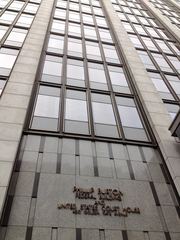
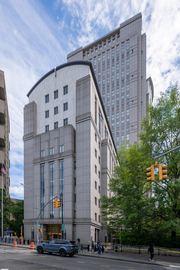
The largest known copyright recovery in United States history is now final. The settlement administrator for Bartz v Anthropic, case 3:24-cv-5417 in the Northern District of California, lists among its court documents an "Order Granting Final Approval" dated 20 July 2026. Reuters reported the approval on 21 July 2026, in a story by Blake Brittain, naming United States District Judge Araceli Martinez-Olguin as the judge who granted it and describing the 1.5 billion dollar deal as the largest known settlement of a US copyright case.
The two dates are not a contradiction. One is the date on the order, the other is the date it was reported. The figures attached to the settlement are a different matter, and they do not reconcile.
The number in wide circulation is roughly 3,109 dollars a book, derived by dividing 1.5 billion dollars by 482,460 works. The AI copyright tracker published by Axis Intelligence uses exactly that arithmetic, citing 482,460 books with an ISBN or ASIN and a US Copyright Office registration, and puts final approval at 20 July 2026. But writing on the IPKat on 11 August 2026, Georgia Jenkins reports that 440,490 works were ultimately eligible out of the 482,460 initially listed, alongside 350 valid opt outs covering 1,802 works. If the divisor is 440,490 rather than 482,460, the gross figure per work is closer to 3,400 dollars before anything is deducted. Neither number is what an author receives, because fees and administration come out of the fund first, and authors who publish through a publisher typically split the award under default contract terms, a point the Authors Guild makes in its guidance for members.
The legal fees are the clearest disagreement. Axis Intelligence records attorney fees of 122 million dollars. Reuters reports that the court awarded plaintiffs' attorneys about 101 million dollars of the 187.5 million they had requested. The IPKat gives a precise figure of 101,561,111 dollars, or 6.8 per cent of the settlement, and notes counsel had initially sought 20 per cent. Norton Rose Fulbright, writing in March 2026 before the award, recorded a request of 300 million dollars in fees plus 2 million in expenses, which is the 20 per cent figure. The request appears to have been reduced between March and July. The 122 million figure is not supported by either the wire report or the IPKat account, which agree with each other at about 101.5 million.
The objection count is also unresolved. Axis Intelligence states that 53 objections were overruled. Reuters reports that Judge Martinez-Olguin rejected complaints from some authors that the settlement was insufficient or overcompensated the lawyers, quoting the court as saying the objections were "not grounded in a realistic assessment of the overall risks and rewards of a trial", without giving a count. The IPKat describes objections seeking novel licensing schemes, source attribution in Anthropic's outputs, and deletion of the models, again without a total. This masthead could not verify a figure of 53 from any of them.
The procedural history is firmer. Judge William Alsup ruled in June 2025 that training on lawfully acquired books was fair use, while holding that Anthropic's retention of more than seven million pirated books in a central library was not, a library the Authors Guild says was built from LibGen and PiLiMi. The Authors Guild notes that the fair use ruling on training applied only to the three named plaintiffs and not to the certified class, and that Alsup granted preliminary approval on 25 September 2025. The settlement administrator's calendar records an opt out and objection deadline of 9 February 2026, a claims deadline of 30 March 2026, and a final approval hearing on 14 May 2026 in Courtroom 12 of the San Francisco federal courthouse. Reuters reports that more than 91 per cent of covered authors and publishers claimed their share.
What the settlement does not cover is as important as what it does. Norton Rose Fulbright records that it addresses past use of training data and not outputs, and requires destruction of the pirated dataset. The IPKat notes it excludes the Books3 dataset and any claim over what the models generate. Some rightsholders opted out and are litigating separately. Anthropic has not admitted liability, and no court has ruled on whether the outputs of a model trained on pirated books infringe anything at all.
Sources
Every factual claim above rests on the 8 published sources below. They are listed so you can check the reporting rather than take it on trust.
- Reuters via Claims JournalJudge approves Anthropic's $1.5 billion copyright settlement with authors
- Anthropic Copyright Settlement (court appointed administrator)Important Documents, including Order Granting Final Approval (July 20, 2026)
- Anthropic Copyright Settlement (court appointed administrator)Key Dates
- Anthropic Copyright Settlement (court appointed administrator)Frequently Asked Questions, Bartz v. Anthropic, case 3:24-cv-5417
- The IPKatThe Bartz/Anthropic settlement is still a hot mess but at least it is the largest known copyright recovery of all time (for piracy)?
- Norton Rose FulbrightAI in litigation series: an update on AI copyright cases in 2026
- The Authors GuildWhat Authors Need to Know About the Anthropic Settlement
- Axis IntelligenceAI Copyright Lawsuits Status Tracker