Judicial independence
India's Supreme Court grew from 34 judges to 38 by ordinance, and Parliament ratified it late
The Supreme Court (Number of Judges) Amendment Act, 2026 received assent on 12 August, 88 days after an ordinance made the same change and 71 days after three judges took seats only the ordinance created. The Lok Sabha spent four minutes on the Bill; the Rajya Sabha two hours.
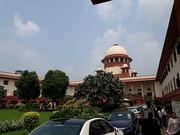
India's Supreme Court got four more seats in May 2026, filled three of them in June, and only received parliamentary authority for any of it in August.
The Supreme Court (Number of Judges) Amendment Act, 2026 received presidential assent on 12 August 2026, as reported that day by Live Law and by Bar and Bench. It lifts the sanctioned strength of the court from 34 judges to 38, counting the Chief Justice of India. The 1956 Act it amends counts only the judges other than the Chief Justice, which is why the legislative record kept by PRS Legislative Research describes the same change as a move from 33 to 37. Bar and Bench reported that the new Act operates retrospectively from 16 May 2026.
That retrospective date is the whole story. The Union cabinet cleared a Bill on 5 May 2026, according to Supreme Court Observer, and the government said it would be tabled in the next session of Parliament. Eleven days later the identical change was made by ordinance instead. PRS records the ordinance as issued on 16 May. Supreme Court Observer reported gazette notification on 16 May and promulgation on 18 May. The Wire dated the promulgation to 17 May. The three accounts differ by two days and agree on the substance: one word in section 2 of the Supreme Court (Number of Judges) Act, 1956, thirty three becoming thirty seven.
Under Article 123 of the Constitution the President may legislate by ordinance only when Parliament is not in session and immediate action is necessary. The Wire, on 17 May 2026, reported that the ordinance recital reproduced that formula and named no circumstance at all. It also reported that the proposal had reached the government from the office of Chief Justice Surya Kant while Parliament was sitting, and that the Monsoon Session was already scheduled for July. Supreme Court Observer dated the Chief Justice's letter to February 2026; The Wire dated it to March. Neither identified any emergent event between 5 May and 16 May.
The seats were used quickly. The Tribune reported that on 2 June 2026 Chief Justice Surya Kant administered the oath of office to Justices Sheel Nagu, Shree Chandrashekhar, Sanjeev Sachdeva and Arun Palli, and to senior advocate V. Mohana, taking the working strength to 37 against a sanctioned 38. Supreme Court Observer had put the working strength at 32 on 5 May, with two vacancies against the old sanctioned figure of 34. On that arithmetic two of the five appointments filled pre existing vacancies and three could exist only because of the ordinance. By 28 June, after two retirements, the Tribune counted three vacancies again.
Parliament then ratified what had already happened. PRS records the Bill as introduced in the Lok Sabha on 20 July 2026, passed by the Lok Sabha on 3 August and passed by the Rajya Sabha on 5 August. The Press Information Bureau confirmed on 13 August that the session ran to 19 sittings over 25 days and passed 12 Bills, two of them replacing ordinances. Live Law, reviewing the session on 16 August, reported that the Supreme Court Bill cleared the Lok Sabha in four minutes, and that the Rajya Sabha discussed it for more than two hours with 33 members participating.
Whether the extra judges will do what the government said they would do is contested. Supreme Court Observer put pendency at 92,823 cases on 30 April 2026, drawing on the National Judicial Data Grid, and at 93,731 in its own bench expansion timeline. The Wire put the figure above 93,000 as at 31 March 2026. That timeline records eight judges in 1950, 11 in 1956, 14 in 1960, 18 in 1978, 26 in 1986, 31 in 2009 and 34 in 2019, with institutions outrunning disposals in every year except 1986. The Wire dated the increase from 26 to 31 to 2008 and gave a pendency figure of 45,887 for that year, against Supreme Court Observer's 59,859 for 2009. Both used the record to argue that expansion has never been followed by a fall in pendency.
Writing in Live Law on 30 May 2026, senior advocate V. Sudhish Pai pressed the opposite risk: that 38 judges means 18 or 19 simultaneous benches, and that a final court sitting in that many configurations produces inconsistency rather than speed. The Wire pointed instead to 371 vacancies among 1,122 sanctioned High Court judgeships and more than 63 lakh pending High Court cases, none of which the four new seats touch.
What is not known is whether anyone will test the ordinance. A seven judge bench held in Krishna Kumar Singh v State of Bihar (2017) that the President's satisfaction under Article 123 is not immune from judicial review, and a constitution bench in D.C. Wadhwa v State of Bihar (1987) called misuse of the power a fraud on the Constitution. No challenge to the 2026 ordinance has been reported. Nor is it known whether the permanent Constitution Bench the Chief Justice was said to want will follow, or when the collegium will fill the three seats still empty.
Sources
Every factual claim above rests on the 12 published sources below. They are listed so you can check the reporting rather than take it on trust.
- Live LawPresident Grants Assent To Law Increasing Strength Of Supreme Court To 38
- Bar and BenchPresident gives assent to law increasing number of Supreme Court judges from 33 to 37
- PRS Legislative ResearchThe Supreme Court (Number of Judges) Amendment Bill, 2026
- PRS Legislative ResearchThe Supreme Court (Number of Judges) Amendment Ordinance, 2026
- Press Information Bureau, Ministry of Parliamentary AffairsMonsoon Session of Parliament Adjourns Sine Die; 12 Bills Passed by both Houses of Parliament
- Supreme Court ObserverCabinet clears Bill to expand Supreme Court strength to 38 judges
- Supreme Court ObserverOrdinance lifts SC strength to 38, Collegium likely to begin deliberations
- Supreme Court ObserverBench expansion and pendency: A timeline
- The WireOrdinance Raj: Supreme Court Gets Bigger Through a Surrogate Legislation
- Live LawIncrease In Supreme Court Strength Through Ordinance: A Critique
- The TribuneEven after getting 5 judges this month, Supreme Court faces 3 vacancies
- Live LawParliament Monsoon Session 2026 Recap: 12 Bills Passed, Mostly Without Debate