Security and alliances
Turkey's foreign minister says the Mecca pact copies NATO's committees, not its nuclear cover
Pakistan, Saudi Arabia and Turkey signed the Makkah Joint Defence Agreement on 7 August 2026, agreeing an armed attack on one is an attack on all. Hakan Fidan says it will run through NATO style committees and a secretariat in Saudi Arabia. No published text mentions nuclear weapons.
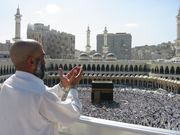
The text of the agreement is short, and one of the three governments has published it. Pakistan's Ministry of Foreign Affairs released a statement recording that at Al Safa Palace in Mecca on 7 August 2026, corresponding to 24 Safar 1448, Prime Minister Muhammad Shehbaz Sharif, Saudi Crown Prince Mohammed bin Salman and Turkish President Recep Tayyip Erdogan signed the Makkah Joint Defence Agreement. The operative sentence reads that any armed attack against any one of the three States shall be regarded as an attack against them all. The ministry framed the pact as strengthening collective deterrence and deepening defence cooperation, and grounded it in what it called Islamic solidarity and shared strategic interests.
What the three states will actually build was described the following day by Turkey's Foreign Minister Hakan Fidan. Speaking on 8 August, Fidan said the agreement would operate in a manner similar to NATO, with a ministers' committee, political and military committees, and a permanent secretariat responsible for overseeing implementation of decisions. He said the secretariat would be based in Saudi Arabia, and that joint military exercises and training programmes were planned. That is the specific institutional claim, and it comes from a signatory rather than from an analyst.
Other accounts published on the same days are less confident that this is an alliance in the NATO sense. Al Jazeera's explainer on the day of signing quoted Ozgur Unluhisarcikli describing the pact as a framework for closer strategic, military and defence industrial coordination rather than a binding pact comparable to NATO, and noted that the three bring different assets: Turkey's defence industry, Saudi financial weight, and Pakistan's military experience. Turkish officials said the pact was defensive in nature and not directed at any specific actor. Both things are being said at once, and neither has been tested.
On the question most often asked about the pact, the documents are silent. The Center for Strategic and International Studies examined the earlier bilateral Strategic Mutual Defence Agreement that Pakistan and Saudi Arabia signed on 17 September 2025, and found that the press release announcing it makes no mention of nuclear deterrence or nuclear weapons, and that Pakistan's defence minister, having initially suggested those capabilities would be available, later clarified that nuclear weapons were not on the radar. That analysis, published on 6 October 2025 by Diya Ashtakala, Doreen Horschig and Bailey Schiff, noted that the bilateral text uses the word aggression rather than armed attack, wording that could stretch to terrorism, proxy attacks or minor incursions without a clear boundary, and concluded that the arrangement lacks the provisions it would need to become a NATO style alliance. The Mecca communique released by Pakistan's foreign ministry likewise says nothing about nuclear weapons. Nothing published so far shows a nuclear guarantee, which is not the same as showing there is none.
The trigger, according to analysts quoted by Al Jazeera on 8 August, is doubt about Washington. Kristian Coates Ulrichsen of Rice University said regional states were seeking additional strategic and policy options rather than abandoning American partnerships, while harbouring growing doubts about the reliability of the United States security partnership. Sina Toossi of the Center for International Policy described the pact as evidence that regional states are reassessing security after the United States and Israeli war on Iran, which began in February 2026. Yasmine Farouk of the International Crisis Group called it normative deterrence and a long term cooperation framework rather than a replacement for American guarantees.
Fidan has also said the three do not intend to stay three. He called Egypt a natural partner and said he expected Cairo to join formally once technical issues were ironed out, adding that President Erdogan's vision was for the initiative not to remain limited to three countries but to grow. Reporting on 9 August named Qatar and Kuwait as the candidates analysts consider most likely, with Gulf Cooperation Council states, Azerbaijan, Syria and Jordan also mentioned. The analyst Karim Elgendy said Egypt would need assurance that any commitment never reads as a commitment against Israel.
India's response was deliberately thin. At the weekly Ministry of External Affairs briefing on 8 August, spokesperson Randhir Jaiswal said only that this is a development we are monitoring closely and we will keep you updated. Iran's reaction was louder and not uniform. Iran International reported on 7 August that Ebrahim Rezaei of the parliamentary National Security Committee told the signatories to correct their policies so they would no longer need to go begging for security, that Qom Friday prayer leader Alireza Arafi warned that the roar of Iranian missiles would threaten governments aligned with Iran's enemies, and that Foreign Minister Abbas Araghchi called instead for Muslim unity and self reliance.
Several things remain unknown. The full treaty text has not been published by any of the three governments, only the communique. No secretariat head, budget, headquarters address or ratification timetable has been announced. It is not established whether the attack clause obliges an automatic military response or only consultation, which is the difference that matters. Nor has any government said on what terms new members would join, beyond Fidan's statement that accession requires the consent of the existing three.
Sources
Every factual claim above rests on the 11 published sources below. They are listed so you can check the reporting rather than take it on trust.
- Ministry of Foreign Affairs, PakistanMakkah Al-Mukarramah Summit for Joint Defence
- Al JazeeraTurkiye, Saudi Arabia and Pakistan sign joint defence agreement: what is in it
- Al JazeeraWhat could the Mecca defence pact mean for the US role in the Middle East
- Al JazeeraWhich other countries could join the Turkiye, Saudi, Pakistan defence pact
- Turkiye TodayTurkish FM signals Egypt could join Mecca defense pact
- Center for Strategic and International StudiesCould the Pakistani-Saudi defense pact be a first step toward a NATO-style alliance
- DawnPM Shehbaz arrives in Saudi Arabia on three-day visit
- Iran InternationalIran reacts to the Mecca defence pact
- The Tribune (India)India reacts as Pakistan, Saudi Arabia and Turkiye sign defence agreement
- The Express TribuneAttack on one, attack on all
- WikipediaMecca Joint Defence Agreement
More in World News
A Stockholm court put Google's Shopping bill at 14.3 billion kronor and found the abuse ran past 2017
Sixty six jurisdictions cleared the Paramount takeover of Warner Bros. Discovery. A US court has it frozen
The General Assembly backed the World Court's climate opinion 141 to 8, but the reparation test is narrow