Redistricting
Prop 50's map beat a Republican and a Justice Department challenge, then a one sentence Supreme Court order
A three judge panel denied preliminary injunctions on 14 January 2026 by 2 to 1, finding the evidence of partisan motive overwhelming and the evidence of racial motive exceptionally weak. On 4 February 2026 the Supreme Court denied an injunction in a single sentence, with no noted dissents.
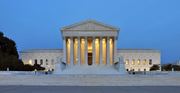
The mid decade redistricting fight is usually told as a swap of gerrymanders between Texas and California. The docket in Tangipa v. Newsom records something more specific: the United States Department of Justice intervened as a plaintiff against a state map approved by that state's voters, and lost twice in three weeks.
The case was filed on 5 November 2025 by Assemblyman David Tangipa, the California Republican Party and individual voters, and a three judge panel was appointed on 13 November 2025. The claim was that the congressional map enacted through Proposition 50 was a racial gerrymander favouring Hispanic voters, in breach of the Fourteenth and Fifteenth Amendments. Democracy Docket's case file shows the Justice Department moved to intervene as a plaintiff on 13 November 2025, was granted intervention on 14 November, and filed its complaint in intervention on 17 November. The Democratic Congressional Campaign Committee and the League of United Latin American Citizens intervened on the other side. An evidentiary hearing ran from 15 to 17 December 2025.
On 14 January 2026 the panel denied the preliminary injunctions by 2 to 1. Judge Josephine Staton wrote for the majority and Judge Kenneth K. Lee of the Ninth Circuit, a Trump appointee, dissented. Reports differ on the third judge: Roll Call named Wesley L. Hsu and California Globe named Fred W. Slaughter, and this masthead has not resolved the discrepancy. The majority found the record contained a mountain of statements about partisan goals from which the challengers had culled only a molehill about race, and concluded the map was what it had been advertised as during the campaign, a political gerrymander aimed at flipping five Republican held seats. Judge Lee's dissent argued race likely predominated in at least one district and that a larger partisan plan does not license smuggling in racially drawn seats. Attorney General Pam Bondi said the administration disagreed and was reviewing its options.
The challengers appealed the next day, 15 January 2026, and asked the panel for a stay. The panel refused on 16 January. An emergency application for a writ of injunction pending appeal reached the Supreme Court on 20 January 2026, docketed as 25A839, and the Trump administration filed a brief supporting it on 22 January.
The Supreme Court disposed of it on 4 February 2026. The election law scholar Richard Hasen, who published the order in full at Election Law Blog and who discloses that he filed an amicus brief in the case, recorded the entire text: the application for writ of injunction pending appeal presented to Justice Kagan and by her referred to the Court is denied. There was no reasoning, and there were no noted dissents. SCOTUSblog reported that no justice publicly dissented.
The absence of dissent is the part worth pausing on, because the Court had granted the mirror image application from the other direction two months earlier. In Abbott v. League of United Latin American Citizens the justices allowed Texas to use a map drawn to add roughly five Republican seats. California's filings leaned on that symmetry, arguing its map should not be treated differently, and SCOTUSblog's account notes Justice Alito had described both maps as driven by partisan advantage and nothing more. Whatever the justices thought of Proposition 50, none of them wrote it down.
Proposition 50 was a ballot measure, which is what made the racial gerrymandering claim awkward. The challengers had to show that an electorate, not just a legislature, acted with a racial purpose. Roll Call reported the map increased the number of districts with Hispanic majorities from 14 to 16, which was the factual core of the claim. The panel majority held that race consciousness in the drawing room is not the same thing as racial predominance in the enacted plan.
What has been decided is narrow. The 14 January order denied preliminary relief; it did not finally rule on the merits. The map is in use for the 2026 midterms, with the candidate filing deadline for the June primary having passed on 6 March 2026. The case itself has not ended. Democracy Docket's file shows the matter was consolidated with Noyes v. Newsom on 17 March 2026, a consolidated complaint was filed on 27 March, and a hearing on motions to dismiss was scheduled for 19 August 2026. Whether the Justice Department stays in the case as a plaintiff through that hearing, and what the panel does with the merits after an election has already been run on the map, is not yet known.
Sources
Every factual claim above rests on the 8 published sources below. They are listed so you can check the reporting rather than take it on trust.
- Election Law BlogBreaking: with no noted dissents and no discussion, Supreme Court allows California to use its Prop. 50 congressional redistricting maps in 2026
- SCOTUSblogSupreme Court allows California to use congressional map benefitting Democrats
- Democracy DocketCalifornia congressional redistricting challenge (Tangipa)
- Elias Law GroupFederal court rejects Trump DOJ and GOP challenge to California's Proposition 50 congressional map
- Roll CallCourt rejects challenge to California's new congressional map
- California GlobeFederal court upholds California's Prop 50 congressional maps, dismisses racial gerrymandering claims
- KQEDFederal judges uphold California's new congressional maps favoring Democrats
- CBS NewsCourt upholds Prop 50, allowing California to use its newly redrawn congressional maps
More in Democracy
The Supreme Court left Section 2 standing in Callais and changed what plaintiffs have to prove

Mississippi can still count mail ballots that arrive five days late, with Barrett writing and Alito dissenting
Party committees can now spend without limit alongside their own candidates after a 2001 precedent fell