Executive power
The Supreme Court buried Humphrey's Executor on 29 June 2026 and exempted the Federal Reserve the same day
Trump v. Slaughter, No. 25-332, overruled the 1935 precedent by 6 to 3. Hours later, in Trump v. Cook, No. 25A312, the same Court refused by 5 to 4 to let the president remove a Federal Reserve governor, resting the carve out on the First and Second Banks of the United States.
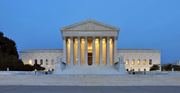
The United States Supreme Court decided two presidential removal cases on 29 June 2026, and the summary that travelled furthest, that the president may now fire anyone, describes only one of them.
In Trump v. Slaughter, No. 25-332, the Court held by 6 to 3 that the for cause removal protection Congress gave to members of the Federal Trade Commission is unconstitutional, and overruled Humphrey's Executor v. United States, 295 U.S. 602 (1935). Chief Justice John Roberts wrote for the majority, joined by Justices Alito, Gorsuch, Kavanaugh and Barrett, with Justice Thomas joining all but Part III-B and Justice Gorsuch filing a concurrence. The opinion text published by Cornell's Legal Information Institute records the majority's conclusion that the 1935 decision had long been, in its words, a result in search of a rationale. Justice Sotomayor dissented, joined by Justices Kagan and Jackson. SCOTUSblog reported that the dissent ran to 49 pages and accused the majority of handing the president a power the English Crown never held.
The statute at the centre of the case, 15 U.S.C. section 41, has since 1914 permitted removal of a commissioner only for inefficiency, neglect of duty or malfeasance in office. According to DLA Piper's account of the record, the letters that removed Commissioners Rebecca Slaughter and Alvaro Bedoya in March 2025 invoked none of those grounds. They said the commissioners' continued service conflicted with the administration's priorities and relied on the President's authority under Article II. Slaughter and Bedoya sued on 27 March 2025. A district court ruled against the government on 17 July 2025 and reinstated Slaughter, the D.C. Circuit denied a stay on 2 September 2025, and the Supreme Court granted a stay on 22 September 2025 and took the case before judgment. Argument was heard on 8 December 2025.
The part of the day that received far less attention is the exception. The Slaughter majority did not write a rule that swallows every multi member body. Cornell's text of the opinion records the Court naming the Federal Reserve as an example of an entity that may sit outside the holding, to the extent that it follows in the tradition of the First and Second Banks of the United States, and saying that its prior cases do not necessarily reach the constitutionality of such arrangements.
That sentence was not hypothetical, because the companion case was already before the Court. Trump v. Cook, No. 25A312, arose from the President's attempt on 25 August 2025 to remove Lisa Cook from the Board of Governors of the Federal Reserve System, the first attempt to remove a governor in the central bank's history. The stated basis was an allegation of mortgage fraud raised by the director of the Federal Housing Finance Agency, Bill Pulte. Judge Jia Cobb granted a preliminary injunction on 9 September 2025, finding Cook had made a strong showing that the removal did not satisfy the Federal Reserve Act's for cause requirement, and a D.C. Circuit panel declined to disturb that by 2 to 1 on 15 September 2025. The Supreme Court heard argument on 21 January 2026 and denied the government's application on 29 June 2026.
The vote in Cook was 5 to 4. Brookings and Wikipedia both record Chief Justice Roberts writing, joined by Justice Kavanaugh and by Justices Sotomayor, Kagan and Jackson, with Justices Thomas, Alito, Gorsuch and Barrett in dissent. The reasoning is historical rather than functional. The opinion text at Cornell traces a long American tradition of independent central banking through the Bank of North America and the First and Second Banks, and says the founding generation understood the damage that even the suspicion of political manipulation of monetary policy could do. Justice Thomas contested the history directly, arguing that the First and Second Banks held no sovereign power and did not set monetary policy, so there is no tradition to inherit.
What the split leaves is a boundary nobody has drawn yet. Holland and Knight lists the agencies now exposed by Slaughter, among them the National Labor Relations Board, the Securities and Exchange Commission, the Federal Communications Commission, the Equal Employment Opportunity Commission and the Merit Systems Protection Board. Brookings sets out three questions Cook did not answer: what process a president must follow before attempting a removal for cause, whether the protection extends to the Federal Reserve's bank supervision work as distinct from monetary policy, and whether a five justice coalition assembled on an emergency application holds when the merits return. Cook's own case was not finally resolved on 29 June; the Court denied a stay, and the litigation continues below.
Sources
Every factual claim above rests on the 8 published sources below. They are listed so you can check the reporting rather than take it on trust.
- SCOTUSblogCourt allows Trump to fire FTC commissioner and overturns major restraint on presidential power
- DLA PiperSupreme Court overrules Humphrey's Executor, upholds Federal Reserve independence
- Legal Information Institute, Cornell Law SchoolTrump v. Slaughter, No. 25-332
- Legal Information Institute, Cornell Law SchoolTrump v. Cook, No. 25A312
- Brookings InstitutionFed independence after Trump v. Cook
- Holland and KnightWhat the Trump v. Slaughter decision means for independent agency governance
- WikipediaTrump v. Slaughter
- WikipediaTrump v. Cook
More in Democracy
The Supreme Court left Section 2 standing in Callais and changed what plaintiffs have to prove

Mississippi can still count mail ballots that arrive five days late, with Barrett writing and Alito dissenting
Party committees can now spend without limit alongside their own candidates after a 2001 precedent fell