Courts
Two years after Snyder, federal corruption law covers bribes but not rewards, and the states have been left to fill the gap
The Supreme Court held in June 2024 that the statute barring state and local officials from accepting anything of value reaches bribes but not gratuities, overturning the conviction of an Indiana mayor who took $13,000 from a firm he had steered $1 million in contracts to. Prosecutors have been adjusting ever since.
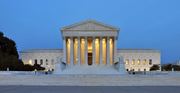
James Snyder was the mayor of Portage, Indiana. He accepted more than $13,000 from a local truck dealership as a reward for steering that dealership more than $1 million in city contracts. He was prosecuted under the federal statute that bars state and local government officials from corruptly accepting anything of value from any person, intending to be influenced or rewarded for an official act.
On a Wednesday in June 2024 the Supreme Court sided with him, six to three, along ideological lines. The majority opinion, written by Justice Brett Kavanaugh, held that the law applies only to bribes and not to gratuities. A bribe is a payment made in exchange for a future decision. A gratuity is a payment that rewards a decision already taken. For decades the provision had been understood to criminalise both.
The Brennan Center for Justice, which described the ruling as a significant escalation of a run of decisions limiting the reach of federal anticorruption law, set out the majority's reasoning: an analysis of the statute's wording, the observation that it is structured differently from another statute covering federal officials, and an appeal to federalism, on the ground that the law targets misconduct at state level. The majority also worked through a series of hypothetical consequences of a broader reading, including the prospect of local rubbish collectors being convicted for accepting gift cards from residents.
Justice Ketanji Brown Jackson, writing for the three dissenters, called the majority's reading absurd and atextual.
The practical question is what happens to prosecutions. The government affairs firm MultiState, writing in January 2026, argued that the effect of Snyder and decisions like it is a shift of enforcement away from federal prosecutors and onto state and local ones. Its analysis noted that the same narrowing had already been felt elsewhere: in the trial of the then New Jersey senator Bob Menendez, a narrowed definition of an official act contributed to a jury declaring a mistrial on allegations that he had accepted bribes from a major campaign donor.
MultiState's conclusion was blunt. To combat public corruption, it wrote, the states can no longer rely on federal law to regulate this behaviour, and state and local prosecutors will have to enforce their own laws against their own officials. It pointed to Michigan, which has tightened its rules on lobbyists providing gifts, as an example of a state legislating into the space the Court has opened.
Whether that substitution actually happens is the open question. State gift and gratuity laws vary enormously in scope, in penalty and in whether anyone is resourced to enforce them, and a federal prosecutor's office is a very different institution from a county one.
Meanwhile the largest public corruption case in recent Chicago history is in front of an appellate court. On 9 April 2026, lawyers for Michael Madigan, the former speaker of the Illinois House of Representatives, appeared before a three judge panel of the Seventh Circuit Court of Appeals in the Dirksen Federal Building, asking it to vacate his convictions. The trial that produced them ran for four months and ended early the previous year. Each side had twenty minutes. Madigan did not attend; members of his family did, including his daughter Lisa Madigan, the former Illinois attorney general. The panel will decide whether the convictions stand.
What is not yet knowable is the aggregate effect. Nobody has published a count of prosecutions not brought because of Snyder, and by their nature such cases leave no record. The argument advanced in April 2026 by the magazine Jacobin, that political corruption is being normalised, is a claim about direction rather than a measured quantity. The measurable part is narrower and firmer: one statute now reaches less conduct than it did, and the institutions expected to cover the difference are not the ones that were covering it before.
Sources
Every factual claim above rests on the 5 published sources below. They are listed so you can check the reporting rather than take it on trust.
- Brennan Center for JusticeSupreme Court Weakens Safeguards Against State Public Corruption
- PBS NewsHourSupreme Court overturns ex-mayor's bribery conviction, making it harder to prosecute public corruption law
- MultiStateHow A Supreme Court Decision Changed Federal Public Corruption Prosecutions (Why State and Local Laws Matter)
- WTTW NewsMichael Madigan Makes Appellate Case, Asking Court to Vacate Corruption Convictions
- JacobinPolitical Corruption Is Being Normalized
More in Democracy
The Supreme Court left Section 2 standing in Callais and changed what plaintiffs have to prove

Mississippi can still count mail ballots that arrive five days late, with Barrett writing and Alito dissenting
Party committees can now spend without limit alongside their own candidates after a 2001 precedent fell