Courts and the law
US Supreme Court upholds state bans on trans girls in school sport, six to three, on 30 June 2026
The Supreme Court of the United States decided Little v. Hecox and West Virginia v. B.P.J. on 30 June 2026, six to three on the Constitution and nine to nothing on Title IX, reversing two appeals courts. Seven weeks earlier Australia's Full Federal Court went the other way and doubled damages to $20,000.
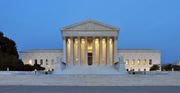
The Supreme Court of the United States held on 30 June 2026 that Idaho and West Virginia may bar transgender girls and women from female sports teams at public schools and colleges. The vote was six to three on the constitutional question and nine to nothing on the statutory one, and it reversed two federal appeals courts that had gone the other way.
The Court decided two cases together: Little v. Hecox, docket 24-38, brought by a Boise State University student who wanted to try out for the women's track and cross country teams, and West Virginia v. B.P.J., docket 24-43, brought on behalf of a school student identified in the litigation only by her initials. Certiorari was granted on 3 July 2025 and the cases were argued on 13 January 2026.
Justice Brett Kavanaugh wrote for the majority. In passages quoted by SCOTUSblog, he wrote that states may maintain women's and girls' sports for biological females and may set eligibility on that basis, reasoning that separate teams exist because of physical differences between the sexes, and that individualised eligibility assessments would create administrative problems better left to legislatures and sporting bodies. On Title IX all nine justices agreed the two state statutes were lawful, although they divided on why. The majority held that "sex" in the 1972 statute cannot plausibly be read to mean anything other than biological sex.
What the decision reverses can be read in full. The Ninth Circuit's amended opinion in Hecox v. Little, number 20-35813, filed on 7 June 2024 and written by Judge Kim McLane Wardlaw, applied heightened scrutiny under United States v. Virginia, 518 U.S. 515 (1996), and upheld a preliminary injunction against Idaho's Fairness in Women's Sports Act. That opinion recorded that the Act bars transgender girls and women from female teams at every age and every level, from primary school through college and from intramural to elite competition, and that it creates a process by which any person may dispute a female athlete's sex and require her to undergo intrusive verification procedures, including gynaecological examination, with no equivalent process for male teams. Idaho, the panel found, produced no evidence that the Act was substantially related to its asserted interests in sex equality and opportunity for women athletes. The Fourth Circuit had struck down West Virginia's Save Women's Sports Act on 17 April 2024 on similar substantial relationship grounds.
Justice Sonia Sotomayor dissented in part, joined by Justices Elena Kagan and Ketanji Brown Jackson, and Justice Jackson wrote separately. Their objection was to categorical bans rather than to sex separated sport as such: the statutes sweep in athletes who have not gone through male puberty, and the majority resolved the question without allowing that narrower claim to be litigated to judgment. Justices Clarence Thomas and Neil Gorsuch each filed concurrences resting on different constitutional footings.
Sources disagree about how much the ruling settles. Marie-Amelie George of Wake Forest University, writing in The Conversation on 1 July 2026, argues the Court deliberately confined itself to athletics and left open whether transgender students may use facilities matching their gender identity or amend identity documents. The Human Rights Campaign, in a statement issued the day the decision came down, put the same silence more sharply, saying the Court declined to fix the level of scrutiny that applies to anti transgender discrimination and thereby left other protections exposed. Counts of the states affected differ too. SCOTUSblog put the number with comparable bans at 26; other accounts say more than 25 as at January 2026.
Seven weeks earlier a comparable common law court went the other way. On 15 May 2026 the Full Court of the Federal Court of Australia decided Giggle for Girls Pty Ltd v Tickle [2026] FCAFC 64. Justices Melissa Perry, Wendy Abraham and Geoffrey Kennett held that excluding a transgender woman from a women only social media application was direct discrimination on the ground of gender identity under the Sex Discrimination Act 1984, upgrading the trial judge's August 2024 finding of indirect discrimination and doubling damages from $10,000 to $20,000. On Bethany Butchers' reading of the judgment for The Conversation, the Full Court also held that a special measure designed to benefit one group cannot licence discrimination on another ground.
The two rulings are not strictly comparable. One construes a written constitution and a federal education statute; the other construes an Australian anti discrimination Act enacted to give effect to treaty obligations. But they are the two most consequential appellate statements on transgender legal status in the English speaking world this year, and they point in opposite directions.
What happens next is not known. The American cases return to the Ninth and Fourth Circuits on remand, where the scope of relief has still to be worked out. In Australia, the losing party has said she will seek special leave to appeal to the High Court, which has not yet been granted or refused. And the constitutional question the Supreme Court avoided, what standard of review applies to laws classifying by transgender status, remains open in every American court below it.
Sources
Every factual claim above rests on the 9 published sources below. They are listed so you can check the reporting rather than take it on trust.
- United States Court of Appeals for the Ninth CircuitHecox v. Little, amended opinion, No. 20-35813
- SCOTUSblogCourt rules that states can exclude transgender athletes from girls' and women's sports teams
- SCOTUSblogLittle v. Hecox (Transgender Athletes) (24-38), case file
- The ConversationSupreme Court rules against trans girls participating in single-sex sports, but leaves open larger questions of trans rights
- Human Rights CampaignSupreme Court Allows States to Exclude Transgender Athletes from School Sports
- WikipediaWest Virginia v. B. P. J.
- WikipediaLittle v. Hecox
- The ConversationA historic court victory has upheld transgender rights in Australia. A legal academic explains why
- WikipediaTickle v Giggle