Housing rights
Canberra court voids forced relocation of three tenants who held their homes 27 to 42 years
The ACT Supreme Court set aside relocation decisions against three public housing tenants who had held the same homes for between 27 and 42 years, declaring on 30 January 2026 that the housing commissioner never considered their right to a home, nor one tenant's cultural rights.
On 30 January 2026 the Supreme Court of the Australian Capital Territory declared invalid a set of decisions that would have moved three women out of public housing homes they had lived in for between 27 and 42 years. Justice Verity McWilliam set the decisions aside, declared that the Commissioner for Social Housing had failed to give proper consideration to the tenants' human rights, and ordered the Commissioner to pay their costs. The judgment is Hubzin v The Commissioner for Social Housing; Van Loo v The Commissioner for Social Housing; Irwin v The Commissioner for Social Housing [2026] ACTSC 11. It was argued on 13 and 14 July 2023, so the three plaintiffs waited two and a half years for reasons.
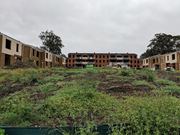
The decisions flowed from the ACT Growing and Renewing Public Housing Program, under which the territory sells or demolishes existing public housing to fund new stock. The properties tenanted by Katarina Hubzin, Yvette Van Loo and Faye Irwin were brought into the program between 2020 and 2022, the decisions affecting the second and third plaintiffs both dated 23 December 2020. The power used was clause 28(2) of the Housing Assistance Public Rental Housing Assistance Program 2013 (No 1), a disallowable instrument made under section 19(1) of the Housing Assistance Act 2007. Clause 28(3) declared such a decision "not a reviewable decision". None of the three women was given a chance to be heard first.
The Commissioner conceded the denial of procedural fairness and consented to orders setting the decisions aside. Justice McWilliam made the finding anyway, holding at paragraph 40 that giving no opportunity to be heard on a decision expressly insulated from review amounted to jurisdictional error. She granted an extension of time to 26 October 2022, noting at paragraph 26 that the way the decisions were communicated had been "haphazard".
The contested part was the Human Rights Act 2004. Section 40B(1) requires a public authority not to act incompatibly with a human right, and separately to give proper consideration to relevant rights when deciding. The Commissioner argued that section 12(a), the right not to have one's home interfered with unlawfully or arbitrarily, was not engaged because nobody was being evicted, only transferred. Justice McWilliam rejected that, holding that "home" is to be read in a simple and untechnical way and that removing a person from it without consent, including by compulsory transfer, is an interference. Because the evidence showed no consideration of the women's individual circumstances at any stage, the procedural limb was breached, and at paragraph 90 she held that finding alone disposed of the case.
The third plaintiff, Faye Irwin, is a Kamilaroi woman who argued her cultural rights under section 27 were engaged. The Commissioner answered that her house was not on her ancestral country. The Court held at paragraph 145 that Aboriginal cultural rights are not confined to ancestral land, and that Aboriginal people practise culture wherever they live. That right, too, was never considered.
The plaintiffs did not win everything. Justice McWilliam held that the right to freedom of choice of residence in section 13 had been properly considered, because the women were offered a choice of properties, and that section 10, protection from cruel, inhuman or degrading treatment, was not engaged at all. She refused an injunction and declined to make any order under section 40C that would fetter a future lawful exercise of the same power. The Commissioner may decide again, provided the process is fair and the rights are weighed.
The reasons open with an unusual authority. At paragraph 16 the Court quotes Darryl Kerrigan in The Castle, then traces the sentiment back through Blackstone to Cicero.
Australian courts do not agree on how far this reaches. On 19 December 2025 the Victorian Court of Appeal, in Mallard v Homes Victoria [2025] VSCA 339, held that a decision under section 15(1)(a) of the Housing Act 1983 to retire public housing towers carried no obligation of procedural fairness to the residents, and that the interference with their right to home was neither arbitrary nor unjustified. The High Court took the case on 7 May 2026 as M56/2026, limited to the procedural fairness ground. In Queensland, on 6 March 2026, the Supreme Court held in Bobeldyk v Moreton Bay City Council; Eichin v Moreton Bay City Council [2026] QSC 27 that the council breached sections 17, 24 and 25(a) of the Human Rights Act 2019 by clearing a rough sleepers' camp and destroying belongings without considering rights at all.
The ACT will soon have a further instrument. On 17 September 2025 its Legislative Assembly inserted a right to adequate housing into the Human Rights Act 2004, the first Australian jurisdiction to do so. The ACT Government says it commences on 1 January 2027, which is why these three women had to argue privacy and culture instead.
What is not known is how many other tenants were transferred under the same non reviewable clause without a hearing. The judgment does not say, and the government's program page publishes no figure. Nor is it known whether fresh decisions will be made about these three houses, or how the High Court will rule.
Sources
Every factual claim above rests on the 9 published sources below. They are listed so you can check the reporting rather than take it on trust.
- Supreme Court of the Australian Capital TerritoryHubzin v The Commissioner for Social Housing; Van Loo v The Commissioner for Social Housing; Irwin v The Commissioner for Social Housing [2026] ACTSC 11
- Human Rights Law Centre'A man's home is his castle': Court finds ACT Commissioner for Social Housing failed to consider tenants' human rights
- The ConversationIf you live in public housing, what rights do you have to stay in your home?
- Human Rights Law CentreQueensland Supreme Court finds local council breached the human rights of rough sleepers evicted from public land
- High Court of AustraliaCase No. M56/2026, Mallard v. Homes Victoria
- Supreme Court of VictoriaJason Mallard v Homes Victoria [2025] VSCA 339
- ACT GovernmentHuman right to housing
- ACT GovernmentGrowing and Renewing housing program
- ACT Human Rights CommissionHousing becomes a human right in the ACT