Law and democracy
The Supreme Court upheld Bihar's roll revision and sent deleted voters to citizenship authorities
On 27 May 2026 a bench of Chief Justice Surya Kant and Justice Joymalya Bagchi upheld the Special Intensive Revision of Bihar's electoral rolls. The directions attached to that ruling require every citizenship ground deletion to be referred to a Competent Authority within four weeks.
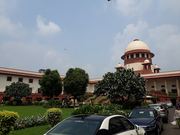
The Supreme Court of India upheld the Election Commission's Special Intensive Revision of Bihar's electoral rolls on 27 May 2026, in Association for Democratic Reforms v Election Commission of India, reported as 2026 SCC OnLine SC 990. The bench of Chief Justice Surya Kant and Justice Joymalya Bagchi delivered the ruling after 29 days of hearing spread over roughly seven months, having reserved judgment on 29 January 2026. The headline was that the exercise survived. The directions that came with it have had far less attention, and they change what a roll revision is.
On the constitutional question the Court held that Article 324 remains plenary and is the foundational source of the Commission's authority over the preparation of rolls and the conduct of elections, not displaced by legislation made under Article 327. It held that section 21(3) of the Representation of the People Act, 1950 specifically contemplates a special revision in exceptional situations, distinct from ordinary revision, and that the exercise complied with that Act and the Registration of Electors Rules, 1960. It distinguished verification from adjudication, and on that basis permitted the Commission to conduct what it called a limited enquiry into citizenship for the purpose of deciding inclusion on a roll, while making clear that such an enquiry is not a determination of citizenship.
That distinction is what generates the directions. If the Commission may look at citizenship but may not decide it, then a deletion made on citizenship grounds has to go somewhere. The Court sent it to the executive. It directed the Commission, within four weeks, to refer every case in which a name was deleted from the 2003 rolls on the ground of non citizenship to the Competent Authority under the Citizenship Act, 1955. That authority is to adjudicate, preferably before the next parliamentary, assembly or local body election, whichever is earlier. Anyone found to be a citizen must be restored to the roll. Persons deleted on other grounds, absence, death, relocation or duplication, may pursue judicial review, and those wrongly recorded as absent while still resident in Bihar may make representations for reconsideration. The Court also directed that Aadhaar, ration cards and elector photo identity cards be accepted as identity documents.
The scale is not small. Bihar's rolls held 7.89 crore electors before the revision and 7.42 crore after it, a reduction of about 47 lakh names, or 5.95 per cent. Phase one of the exercise ran from June to September 2025. How many of those 47 lakh deletions were made on citizenship grounds rather than death, duplication or relocation is not stated in any document opened for this report, and that number determines the size of the pipeline the judgment has created.
The petitioners had argued the opposite of what the Court found. On the final day of hearing, Prashant Bhushan submitted that the revision sought to prepare the rolls de novo, requiring existing voters to file enumeration forms and documents merely to stay enrolled. Vrinda Grover argued that section 21(3) allows the Commission to decide when a special revision occurs, not to invent its methodology, and that imposing new conditions of enrolment amounts to changing electoral law. Shadan Farasat argued that in the absence of a national register of citizens, prepared under section 14A of the citizenship legislation, no authority can determine citizenship at all. Raju Ramachandran objected to the exclusion of previously accepted documents and to the selection of states. P.C. Sen questioned the urgency.
The judgment answers the first two of those and, in a sense, concedes the third. By ruling that the Commission may not determine citizenship and must refer such cases onward, the Court accepted that an electoral registration officer is not the right decision maker. What it then did was route several unknown thousands of people into a citizenship adjudication they did not initiate, on a timetable pegged to elections rather than to any statutory limitation period, arising out of a roll clean up.
That is the part that deserves plain description. A person removed from a roll on citizenship grounds is now, by direction of the Supreme Court, a case file before a Competent Authority under the Citizenship Act, with notice and hearing, and with restoration available only if the authority finds in their favour. The remedy the Court provided is real. It is also an administrative process with a burden and a consequence that an ordinary roll correction does not carry.
What is not known is how many referrals the Commission actually made within the four weeks, whether the Competent Authorities have the capacity to adjudicate them before the next election, how many restorations have followed, and whether the same methodology will now be applied to rolls beyond Bihar. The judgment settles the Commission's power. It does not settle what happens to the people the power removed.
Sources
Every factual claim above rests on the 6 published sources below. They are listed so you can check the reporting rather than take it on trust.
- Supreme Court ObserverSupreme Court backs Bihar SIR exercise, upholds ECI's powers to purify electoral rolls
- SCC OnlineSpecial Intensive Revision: Supreme Court upholds validity of ECI exercise
- Supreme Court of India, via Supreme Court ObserverAssociation for Democratic Reforms v Union of India, Bihar SIR judgment
- Supreme Court ObserverRevision of electoral rolls, day 29: Supreme Court reserves judgement
- WikipediaSpecial Intensive Revision
- Ministry of Law and Justice, via CEO DelhiRepresentation of the People Act, 1950