Media regulation
Australia's news levy reached Parliament with a smaller base, a higher rate and AI chatbots still outside it
The News Bargaining Incentive was introduced on 13 August 2026 charging 2.5 per cent of Australian digital advertising revenue, not the 2.25 per cent of all Australian revenue proposed on 28 April. LinkedIn is in, standalone AI chatbots are out, and the minimum number of publisher deals went from four to eight.
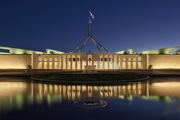
The Albanese government introduced the News Bargaining Incentive Bill and the News Journalism Payments Bill into Parliament on 13 August 2026, according to a media release issued that day by Assistant Treasurer Daniel Mulino. The charge that reached Parliament is not the charge that was released for consultation on 28 April 2026, and the changes go to the base, the rate, the platforms covered and the conditions for avoiding the charge altogether.
The April exposure draft proposed a charge of 2.25 per cent calculated on revenue attributable to Australia, drawn from financial statements from three years earlier so that a platform could not shrink its liability by rearranging current accounts. Consultation on that draft ran through Treasury and closed on 18 May 2026. The version Mulino announced as finalised on 3 August 2026 raises the rate to 2.5 per cent but narrows the base to Australian digital advertising revenue only, and applies it to platforms with more than $250 million of Australian digital advertising revenue. Mulino's 3 August release describes the result as a narrower charge base with an increased incentive rate.
The offsets are the operative part. A platform that does qualifying commercial deals with news businesses reduces its liability by $1.50 for every dollar spent with major publishers and by $2.00 for every dollar spent with small or regional publishers. To use the offsets at all, a platform must hold a minimum number of eligible agreements. That minimum was four in the April draft, six in the version reported on 3 August, and eight in the bill introduced on 13 August, according to Mumbrella's account of the final scheme. No single publisher may account for more than 25 per cent of a platform's total offset, revised up from a 16.6 per cent ceiling in the earlier design.
The scheme also grew a platform. Mulino's 3 August release says professional networking services, previously excluded, are now inside, which brings LinkedIn into a scheme that had covered Meta, Google and TikTok. In April, Google had complained that the policy arbitrarily excluded platforms including Microsoft, Snapchat and OpenAI, as reported by The Daily Aus. By August, Microsoft was inside through LinkedIn. Snapchat and OpenAI, on the published descriptions, are not.
What stays outside is the part least discussed. The April draft expressly carved out artificial intelligence services that solely use large language models to answer questions or supply information, which exempted Gemini, Meta AI and ChatGPT when used as standalone assistants, as The Next Web reported on 28 April 2026. Writing on 13 August 2026, Caroline Fisher and Sora Park of the University of Canberra say generative AI platforms remain entirely excluded from the final scheme, and list that as one of four problems. Their other three are the narrowed revenue base, the concentration risk created by the 25 per cent cap, which they say would let a platform meet the eight-deal minimum while directing 99 per cent of its spending to four companies, and the $150,000 annual revenue eligibility threshold, which they say excludes roughly 35 per cent of members of the Local and Independent News Association.
Money that is not offset is collected and redistributed through the News Journalism Payment Scheme, distributed on counts of journalists employed, a category the government has widened to include photojournalists, videographers, data and visual journalists, editors and producers. The loading for regional and remote journalists, for small to medium organisations and for outlets serving underrepresented communities rose from 10 per cent to 20 per cent. Australian Associated Press receives 5 per cent, and 5 per cent goes to a grants pool for publishers and start-ups below the $150,000 revenue line.
The two sides do not agree on what the redesign did. News Corp executive chairman Michael Miller said the changes make it too easy for platforms to avoid the levy and that tech giants cannot keep dodging their obligations. Mulino said the modifications do not alter the intent of the legislation and remain true to the policy rationale. Communications Minister Anika Wells said the government's firm preference is that publishers do deals with platforms. Meta, whose position is its own claim about its own business, told Mumbrella on 4 June 2026 that the scheme is poorly designed, grossly unfair, irrational and discriminatory, and in April said news organisations voluntarily post content on its platforms because they receive value from doing so.
What is not yet established is whether 2.5 per cent of advertising revenue raises what 2.25 per cent of all Australian revenue would have raised. None of the government releases published so far put a figure on the expected collection. Fisher and Park note the original News Media Bargaining Code produced deals worth between $200 million and $250 million a year. Whether the bills pass in their current form, and whether any platform signs eight deals rather than paying, is also unknown.
Sources
Every factual claim above rests on the 10 published sources below. They are listed so you can check the reporting rather than take it on trust.
- Assistant Treasurer Daniel MulinoSupport for Australian journalism goes before the Parliament
- Assistant Treasurer Daniel MulinoNBI legislation finalised
- Assistant Treasurer Daniel MulinoConsultation on the News Bargaining Incentive now open
- Prime Minister of AustraliaConsultation on the News Bargaining Incentive now open
- The Daily AusTech giants face new News Bargaining Incentive levy
- The Daily AusGovernment plan to force social media to pay news outlets
- The Next WebAustralia's News Bargaining Incentive
- MumbrellaNews Bargaining Incentive introduced to Parliament as government reveals final scheme
- The ConversationNew laws to make tech companies pay for news will help, but there are 4 key problems
- MumbrellaIrrational and discriminatory: Meta slams News Bargaining Incentive
More in Media
Google has made AI Mode the default. Brussels and London are now testing whether publishers can refuse.
The FCC waived the 39 per cent TV ownership cap for Nexstar, and a court then ordered Tegna held separate

The order freezing Paramount's Warner Bros. deal expires today, and no injunction has replaced it