Courts and the law
Two federal courts found the White House ballroom unauthorised by Congress; it is now at the Supreme Court
On 7 August 2026 the DC Circuit ruled 2 to 1 that above ground work must stop because Congress has not authorised the ballroom. Solicitor General D. John Sauer filed an emergency application on 14 August, docket 26A203, and the appeal court's stay of its own order runs out on 21 August.
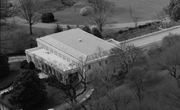
The White House ballroom case is not an argument about taste. It is an argument about an appropriation. Two federal courts have now held that the executive cannot build a large permanent structure on the White House grounds without Congress authorising it, and the Trump administration has asked the Supreme Court to say otherwise before the ruling bites.
The sequence is short and documented. The East Wing was demolished in the northern autumn of 2025. In April 2026 US District Judge Richard Leon, a George W. Bush appointee, ordered above ground construction halted while permitting underground work, including bunkers, military installations and medical facilities, to continue. On 7 August 2026 a three judge panel of the US Court of Appeals for the District of Columbia Circuit upheld him by 2 to 1. Judges Millett and Garcia wrote the majority. Judge Neomi Rao, a Trump appointee, dissented.
The majority's reasoning was about who holds the purse. Congress, they wrote, has full constitutional control over federal property and the funding of its maintenance and development, and it has not appropriated money for this project. The opinion put the point plainly: whether or not a massive ballroom should be constructed is for Congress to decide and is not a matter for Executive self help. Rao's dissent did not reach that question. She argued that the National Trust for Historic Preservation, the non profit that brought the suit, lacked standing to sue at all, and that the president holds authority to improve his residence, writing that the district court had elevated the aesthetic displeasure of a single passerby over the government's security interests in the ballroom.
The panel stayed its own order for 14 days so the administration could go to the Supreme Court, which it did on 14 August. The case is docketed as National Park Service v. National Trust for Historic Preservation, No. 26A203. SCOTUSblog reported that the National Trust's response was due at noon Eastern on 18 August; ABC News reported that the injunction takes effect on 21 August unless the court acts.
Sauer's application makes three moves. It calls Judge Leon's order an extraordinary and unlawful injunction that will halt ongoing construction. It disputes the National Trust's standing, characterising the organisation's position as a dislike rather than a legal injury. And it argues security: ABC News reported that the filing cites six recent assassination attempts, including the threat of a missile attack against Air Force One on 8 July. Sauer also argues that Congress has already authorised presidents to make alterations and improvements to the White House, and that stopping now is worse than continuing.
On that last point the administration's own filings supply the numbers, and the numbers do not entirely agree across outlets. SCOTUSblog, CBS News and PBS NewsHour describe a 90,000 square foot ballroom; ABC News, citing court filings, describes a structure of 50,000 square feet standing 70 feet above ground and running five storeys down. PBS NewsHour and CBS News put the cost at 400 million US dollars; ABC News reports 200 million spent or committed. All agree the work is about 65 per cent complete. ABC reported a crew of 250 working 20 hours a day, seven days a week, and quoted the White House director of management and administration, Joshua Fisher, saying the structure is beyond the point of no return and that if work is stopped it will be a disaster.
The funding is the part that connects the building to the constitutional question. CBS News reported that private donations from corporations including Lockheed Martin, Amazon and Microsoft were collected through a non profit, transferred to the National Park Service, and deposited into a presidential account normally used for minor repairs. That route is what the administration means when it says the ballroom is privately funded and needs no appropriation, and it is what the courts have so far declined to accept as a substitute for one.
The National Trust's own statements are terse. On 7 August its president and chief executive, Brent Leggs, called the appeal court ruling a great day for the American people's right to voice their opinions about the historic places they cherish. On 14 August the organisation said that each court reviewing this case has ruled that construction of the ballroom is unlawful and that each has seriously and carefully considered the administration's asserted national security concerns. It accused the administration of actively attempting to outrun the courts by accelerating construction.
The application also sits inside a pattern. Writing on 30 July, the University of Texas law professor Steve Vladeck counted the administration's mail ballot application, filed on 27 July, as the 35th emergency application of the second Trump presidency. The ballroom application followed on 14 August.
Several things remain unknown. As of 14 August the Supreme Court had not acted, and if it does not act by 21 August the injunction takes effect with the structure part built. No court has yet decided the merits, only the likelihood of success. ABC News reported on 14 August that Senate Democrats had asked the Government Accountability Office to audit the funding, citing concerns about transparency, accountability and stewardship, and no audit has been published. And nobody has said publicly what happens to a 65 per cent complete building if the injunction stands.
Sources
Every factual claim above rests on the 8 published sources below. They are listed so you can check the reporting rather than take it on trust.
- SCOTUSblogTrump brings ballroom dispute to the Supreme Court
- SCOTUSblogTrump signs new birthright citizenship order, ballroom dispute likely headed to Supreme Court
- National Trust for Historic PreservationStatement on Emergency Application to the Supreme Court
- National Trust for Historic PreservationStatement on US Court of Appeals Ruling
- PBS NewsHourTrump asks Supreme Court to let White House resume ballroom construction during appeal
- CBS NewsTrump asks Supreme Court to intervene in White House ballroom legal fight
- ABC NewsTrump admin says WH ballroom beyond the point of no return in Supreme Court appeal
- One First (Steve Vladeck)Bonus 241: The Mail-In Voting Applications