Religious freedom
US Supreme Court rules Rastafarian prisoner cannot sue guards who shaved his dreadlocks
The United States Supreme Court held on 23 June 2026, by 6 votes to 3, that Damon Landor cannot sue the Louisiana prison officers who handcuffed him to a chair and shaved off hair he had vowed not to cut for close to twenty years. The statute at issue dates from 2000.
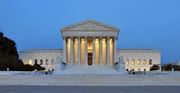
The United States Supreme Court ruled on 23 June 2026 that a Rastafarian man whose head was forcibly shaved by Louisiana prison staff cannot sue those staff for money damages under the federal law Congress passed to protect the religious practice of prisoners. The vote in Landor v Louisiana Department of Corrections and Public Safety, docket 23-1197, was 6 to 3.
The facts were barely contested. Damon Landor was serving a five month sentence in 2020 and had kept a vow not to cut his hair for close to twenty years. Two Louisiana facilities honoured that vow. With three weeks of the sentence left he was transferred to Raymond Laborde Correctional Center at Cottonport, where he handed the intake guard a copy of a 2017 federal appeals court decision holding that the state's practice of cutting the hair of Rastafarians broke federal law. NPR reported on 23 June 2026 that the guard threw the papers in the bin and called the warden, who demanded documentation from Landor's sentencing judge. When Landor could not produce it, guards handcuffed him to a chair, held him down and shaved his head to the scalp. Courthouse News Service reported the same day that he spent his final three weeks in lockdown.
The case turned not on whether that was lawful but on who can be made to pay. The Religious Land Use and Institutionalized Persons Act of 2000 rests on the spending power of Congress, and the majority treated such statutes as contracts between the federal government and the recipient of the funds. Writing for the Chief Justice and Justices Thomas, Alito, Kavanaugh and Barrett, Justice Neil Gorsuch held that individuals face personal liability only where they have voluntarily and knowingly agreed to it. The department took the federal money; the officers signed nothing. Landor's claim, the opinion said, "cannot proceed against them any more than a breach of contract action might proceed against a defendant who never formed a contract".
Gorsuch also set out what he saw as the consequence of deciding the other way, writing that on Landor's theory Congress could require coaches at federally funded universities to permit transgender athletes to play women's sports, or bar doctors at federally funded practices from giving certain vaccines to children, in each case on pain of personal damages.
Justice Ketanji Brown Jackson, joined by Justices Sotomayor and Kagan, dissented. The decision, she wrote, "magically transforms a federal statute into an invitation to be accepted or declined, deemed binding only if each particular defendant has explicitly agreed to be penalized", and reduces federal civil rights, environmental and health laws to "nothing more than the wheelings-and-dealings of an especially wealthy private party". Prisoners whose religious freedom is violated, she wrote, will often be left remediless.
Accounts of how the case reached the court do not fully agree. Courthouse News reported that two lower courts dismissed the suit as moot once Landor had left prison. The opinion as published by the Legal Information Institute at Cornell Law School, and the Free Speech Center at Middle Tennessee State University in its entry of 24 June 2026, frame the loss below as a holding that the 2000 Act simply does not allow damages against individuals.
What survives is unclear in scope. The majority listed routes Congress did not take, including conditioning federal money on officers entering separate agreements of their own, or on the state exercising its own regulatory powers over them. Landor's counsel Zack Tripp, of Weil Gotshal, said the ball is now in the court of Congress, and noted that Louisiana revised its grooming policy in response to the case. Louisiana's attorney general, Liz Murrill, condemned the conduct of the officers, welcomed the ruling and pointed to separate state religious liberty laws. PBS NewsHour reported the state's position that the grooming policy has been amended so that nothing like the alleged experience can occur. Landor said through his lawyers that he was "disappointed but not defeated".
The ruling sits awkwardly beside Tanzin v Tanvir, decided unanimously in 2020, which allowed damages against individual federal officers under the Religious Freedom Restoration Act, and beside Holt v Hobbs in 2015, which protected a Muslim prisoner's beard.
Australia has no equivalent federal statute to test. The Australian Human Rights Commission, in material published on 22 April 2026, said protections against religious discrimination here are incomplete and that in some situations existing legal protections "do not provide for enforceable remedies where discrimination is established". Its stated priority action is that the Australian government introduce laws prohibiting religious discrimination.
It is not known whether Congress will legislate a fix, whether Landor will succeed under Louisiana law, or how many comparable claims by prisoners of any faith now fall away.
Sources
Every factual claim above rests on the 7 published sources below. They are listed so you can check the reporting rather than take it on trust.
- Legal Information Institute, Cornell Law SchoolLandor v. Louisiana Department of Corrections and Public Safety, No. 23-1197 (opinion text)
- Courthouse News ServiceSupreme Court denies damages for Rastafarian dreadlock shaving
- NPRSupreme Court rules that prison guards can't be sued for shaving Rastafarian's head
- SCOTUSblogCourt rules former Louisiana inmate cannot sue prison officials in religious dispute over long hair
- PBS NewsHourSupreme Court rules Rastafari man can't sue Louisiana prison officials who cut his dreadlocks
- Free Speech Center, Middle Tennessee State UniversityLandor v. Louisiana Department of Corrections and Public Safety (2026)
- Australian Human Rights CommissionReligious discrimination: laws and protections (Australian Human Rights Assessment 2026)