Science
Arizona physicists shift the quantum noise inside a light pulse, and watch it move in real time
A University of Arizona group has produced squeezed light pulses lasting 5.3 femtoseconds, which its paper in Light: Science and Applications calls the shortest ultrafast synthesised quantum light pulses generated to date, and tracked quantum noise moving between two properties of the pulse as it passed. The same team has since posted a follow-up that pushes the technique down to individual half-cycles of the electric field.
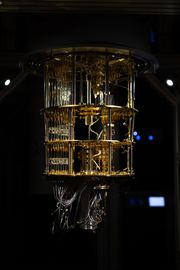
A University of Arizona group has built a source of very short pulses of squeezed light. Using a degenerate four-wave mixing process the team produced synthesised quantum light pulses spanning 0.33 to 0.73 petahertz and lasting 5.3 femtoseconds, which the paper calls the shortest ultrafast synthesised quantum light pulses generated to date. Squeezing was measured at 13.03 decibels in the infrared to visible dataset and 8.81 decibels in the ultraviolet to visible one.
The paper is "Attosecond quantum uncertainty dynamics and ultrafast squeezed light for quantum communication", published in Light: Science and Applications on 3 October 2025 under DOI 10.1038/s41377-025-02055-x. The first author is Mohamed Sennary of the University of Arizona physics department and the corresponding author is Mohammed Th. Hassan, also at Arizona. The others are Javier Rivera-Dean of ICFO in Barcelona, Mohamed ElKabbash of Arizona's Wyant College of Optical Sciences, Vladimir Pervak of Ludwig Maximilian University of Munich, and Maciej Lewenstein of ICFO and ICREA.
Squeezing is worth stating plainly. Heisenberg's relation sets a floor on the product of the uncertainties in two complementary properties of a light field. Squeezing does not lower that floor. It moves noise from one property into the other. Hassan put it this way in the University of Arizona's announcement on 6 October 2025: squeezed light "is stretched into an oval, where one property becomes quieter and more precise, while the other grows noisier".
Squeezed light itself is not new. The paper's own abstract dates the transformation of quantum science by squeezed light to the past three decades and cites gravitational wave detection as the standout application. What is new is the timescale. The team tracked how the amplitude uncertainty of the pulse changed as the pulse passed, and switched the light between amplitude squeezing and phase squeezing by adjusting the angle of a silica plate against the split laser beams. "This is the first-ever demonstration of ultrafast squeezed light, and the first real-time measurement and control of quantum uncertainty," Hassan said.
Two timescales appear in the work and they describe different things. The paper's title refers to attosecond dynamics, and an attosecond is a billionth of a billionth of a second. The University of Arizona's own announcement describes the laser pulses as femtosecond pulses. Both are accurate: the pulse is 5.3 femtoseconds long, and the structure being resolved sits inside a single optical cycle.
The communications application is a proposal rather than a demonstration. The paper sets out a scheme it calls petahertz digital-encoded secure quantum communication, in which binary values ride on amplitude-squeezed waveforms measured against an intensity threshold. The security argument is stated by the authors as follows: "any eavesdropping attempt by Eve to intercept and decode the squeezed light waveform would alter its squeezing degree, thereby revealing the intrusion to both Alice and Bob". That is a design argument, not a protocol tested against an actual interceptor.
The authors are candid about what stands in the way. They name low-loss transmission and pulse dispersion distortion over long distances in dispersive media and optical fibres as the practical obstacles, and suggest the approach is more promising for space to space links, where a pulse travelling through vacuum is not dispersed.
Since then the same group has gone further. On 13 January 2026, in a version revised on 31 March, Sennary, Rivera-Dean, Yihe Wange, Lewenstein and Hassan posted "Attosecond quantum optics" to arXiv. It reports a time-dependent squeezing distribution across individual half-cycles of the electric field, attosecond-scale control of the squeezed state visualised through inferred effective Wigner representations, and a result in which ultrafast squeezed light writes its quantum properties into a photoinduced tunnelling current inside a petahertz phototransistor, which the authors describe as a direct optical electronic quantum coupling. The paper says the work "lays the foundation for the emerging field of ultrafast quantum optics".
That follow-up is a preprint. No record of its publication in a peer-reviewed journal was found as at 15 August 2026, and no independent replication of either result was found.
What remains unresolved is straightforward. The encryption scheme has not been tested against real loss and dispersion, and the 2026 follow-up has not been through review. What the Arizona work controls is where the quantum noise sits inside a pulse, and how fast that can be measured and switched. The floor Heisenberg's relation sets on the product of the two uncertainties is exactly where he left it.
Sources
Every factual claim above rests on the 4 published sources below. They are listed so you can check the reporting rather than take it on trust.
- Light: Science and Applications (via PubMed Central)Attosecond quantum uncertainty dynamics and ultrafast squeezed light for quantum communication
- Nature Publishing / Light: Science and ApplicationsAttosecond quantum uncertainty dynamics and ultrafast squeezed light for quantum communication (journal record, DOI 10.1038/s41377-025-02055-x)
- University of Arizona NewsQuantum uncertainty tamed at the University of Arizona
- arXivAttosecond quantum optics (arXiv:2601.08671)
More in Science

AI-designed viruses clear peer review, then an independent check finds them close relatives of the natural original
Artemis II flew four people 252,756 miles from Earth in April, but the first landing is now Artemis IV in 2028

Nature names MoM-BH*-1, but the black hole star idea dates to March 2025 and is still contested