Space science and policy
Artemis II flew four people 252,756 miles from Earth in April, but the first landing is now Artemis IV in 2028
NASA launched Artemis II on 1 April 2026 and splashed down on 10 April after a flight that reached 252,756 miles from Earth. NASA's own mission page now describes Artemis III in 2027 as a low Earth orbit docking demonstration, and lists Artemis IV in 2028 as the landing.
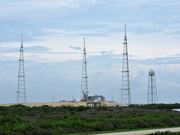
NASA launched Artemis II from Launch Pad 39B at Kennedy Space Center in Florida on 1 April 2026 at 6.35pm EDT, carrying NASA astronauts Reid Wiseman, Victor Glover and Christina Koch and Canadian Space Agency astronaut Jeremy Hansen aboard an Orion spacecraft the crew named Integrity. The agency called it the first crewed lunar flyby in more than 50 years. Orion splashed down in the Pacific Ocean off San Diego at 8.07pm EDT on 10 April and was recovered into the well deck of the USS John P. Murtha.
NASA says the flight reached 252,756 miles from Earth and passed 4,067 miles above the lunar surface. Before the ride home, the spacecraft entered the atmosphere at 400,000 feet travelling at about 35 times the speed of sound, roughly 1,956 statute miles short of the splashdown point, and was slowed by parachutes to less than 200 feet per second at contact with the water. The crew was back at Johnson Space Center in Houston on 11 April for postflight medical evaluations and lunar science debriefs.
The part of the story that has been reported least clearly is what comes next. NASA's Artemis page describes Artemis III, planned for 2027, as a demonstration mission in low Earth orbit that will test rendezvous and docking with commercial human landing systems from SpaceX and Blue Origin. A NASA mission blog post on 5 August 2026 put it in the agency's own words: Artemis III is a crewed demonstration mission that will test rendezvous and docking capabilities with test versions, or test articles, of commercial human landing systems from Blue Origin and SpaceX. That post named the assigned crew as NASA astronauts Randy Bresnik, Andre Douglas and Frank Rubio with ESA astronaut Luca Parmitano.
On the same page, NASA lists Artemis IV, targeted for 2028, as the mission on which the crew will transfer to a commercial lander and go to the lunar surface. Artemis V is anticipated from 2028 onward, with NASA saying it expects one mission a year after that. The 5 August blog post also records that an interim cryogenic propulsion stage has been reassigned to Artemis IV and that more than 250 components from the Artemis II Orion will be reused on Artemis IV and Artemis V.
Al Jazeera reported the same sequencing on 2 April 2026, describing Artemis III in 2027 as a docking exercise in Earth orbit with landers from Blue Origin or SpaceX, and Artemis IV in 2028 as the mission intended to reach the surface. That report differs from NASA's own release on two points of detail: it gives the launch as 2 April from Cape Canaveral, where NASA gives 1 April from Kennedy Space Center. It also predicted a closest approach of 4,000 to 6,000 miles above the Moon, which brackets the 4,067 miles NASA reported afterwards.
Getting to the pad took longer than planned. BBC Sky at Night Magazine's running account records that the stack rolled out to Pad 39B on 17 January 2026, a four mile trip of about 12 hours. A launch attempt in the 6 to 7 February window was postponed for cold weather and winds, and the following attempt was cancelled after problems during the first wet dress rehearsal on 2 February. Those problems included fuelling delays caused by cold weather, a liquid hydrogen leak, audio dropouts affecting ground teams, and a valve retorquing issue connected to Orion crew module pressurisation. The rocket was rolled back into the Vehicle Assembly Building on 25 February. A second rehearsal in late February confirmed the hydrogen leak was fixed, but further problems arose with the flow of helium to the rocket's upper stage, and the March window was scrubbed. The vehicle returned to the pad on 20 March.
What is not settled is the schedule beyond the labels. NASA's published pages give years, not dates, for Artemis III, IV and V, and the 2028 landing target depends on hardware that has so far only been described as test articles. Neither NASA page reviewed for this article states a readiness date for either commercial lander, nor what happens to the Artemis IV landing if the Artemis III docking demonstration does not go as planned.
Sources
Every factual claim above rests on the 8 published sources below. They are listed so you can check the reporting rather than take it on trust.
- NASALiftoff! NASA Launches Astronauts on Historic Artemis Moon Mission
- NASAArtemis II Flight Day 10: Re-Entry Live Updates
- NASAArtemis II Astronauts Back in Houston, Reunite with Families
- NASAArtemis (human exploration campaign overview)
- NASANASA Joins Artemis III Orion Modules; Rocket Hardware Update
- NASAArtemis mission blog index
- BBC Sky at Night MagazineWhen will Artemis II launch?
- Al JazeeraHow long will Artemis II take to reach the Moon, and what happens next?
More in Science

AI-designed viruses clear peer review, then an independent check finds them close relatives of the natural original

Arizona physicists shift the quantum noise inside a light pulse, and watch it move in real time

Nature names MoM-BH*-1, but the black hole star idea dates to March 2025 and is still contested